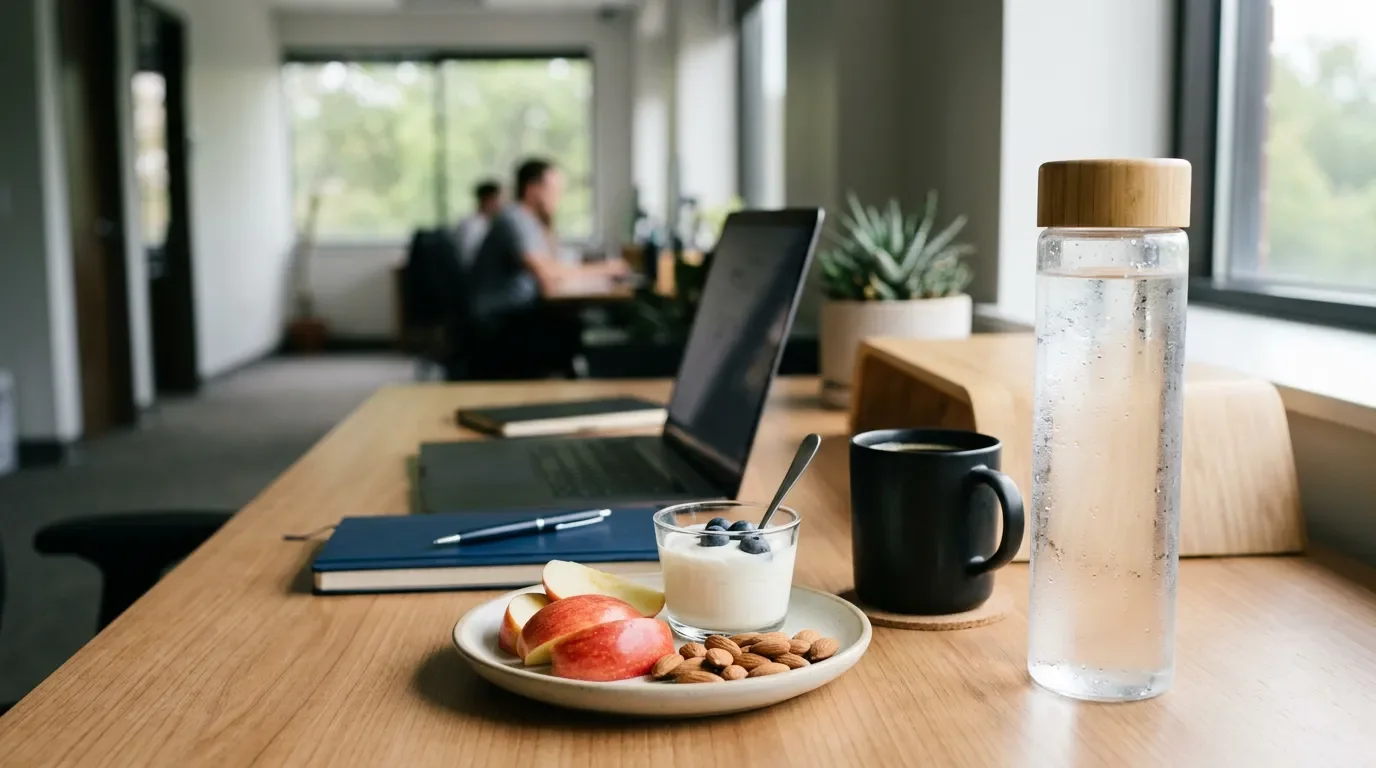
The water-first workday: why hydration belongs in your afternoon-crash plan
This guide shows busy professionals how to treat hydration as part of their focus system, not an afterthought. It translates hydration and blood-sugar evidence into the channel's five-window framework, four desk-ready Power Snack examples, and zero-prep micro-habits for steadier afternoon energy.
Most professionals blame the 3pm crash on lunch, sleep, or discipline. Those matter. But the faster check is simpler: before you buy another coffee, ask whether your brain has had enough fluid to do the basic work of attention.
CDC's hydration guidance notes that dehydration may show up as unclear thinking and mood changes, not just thirst. 1 A small 2019 self-controlled trial in 12 male college students found that 36 hours without drinking water was associated with worse vigor, short-term memory, and attention; after rehydration, fatigue, mood disturbance, memory, attention, and reaction measures improved. 2 That study is not a one-to-one map for every office worker, but it points to a useful workplace rule: treat hydration as part of your focus system, not as a wellness extra.
The daily framework: five hydration-and-fuel windows
Do not turn this into a gallon-jug contest. Harvard's Nutrition Source summarizes National Academy of Medicine guidance as about 13 cups of daily fluids for healthy men and 9 cups for healthy women, while also noting that individual needs vary and these numbers are a guide rather than a rigid daily target. 3 Harvard also notes that about 20% of total water intake often comes from water-rich foods such as fruits and vegetables, and that coffee and tea can contribute to total fluid intake for many adults. 3
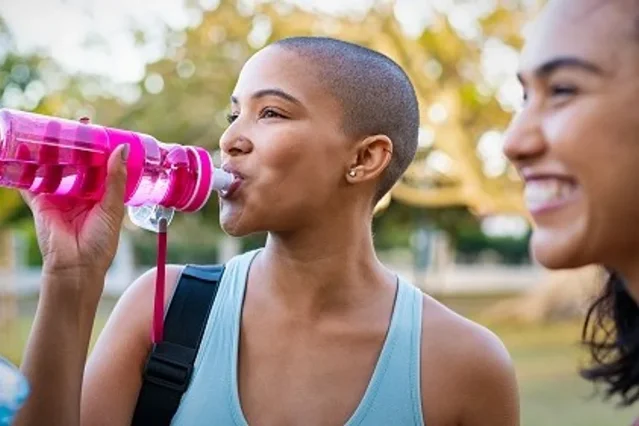
Use the five-window framework to make water and food show up before your focus drops:
| Window | What to do | Why it works at work |
|---|---|---|
| Wake-to-coffee | Drink water before or with coffee. | You keep the ritual without making coffee your only morning fluid. |
| 10am checkpoint | Add protein or fiber if breakfast was light. | This prevents the first real fuel decision from happening under pressure. |
| Lunch landing | Pair lunch with water, not a sweet drink by default. | CDC notes that replacing sugary drinks with plain water can reduce caloric intake. 1 |
| 2:30pm bridge | Refill your bottle before choosing a snack. | You separate thirst, boredom, and real hunger before the vending-machine moment. |
| Commute closeout | Take a final few minutes to drink and pack tomorrow's snack. | The next workday starts with less decision friction. |
The Power Snack Formula: water plus slow fuel
A beverage can sharpen the hydration side of the system, but it cannot replace actual fuel. The better afternoon move is water plus the Power Snack Formula:
Protein + Fiber + Healthy Fats
Joslin Diabetes Center explains that fiber, protein, and fats help slow the digestion of carbohydrates and delay their absorption into the blood, which can help prevent glucose spikes after eating. 4 Harvard's blood sugar guide makes the same practical point from the carbohydrate side: high-fiber foods slow digestion and tend to produce a more gradual, lower rise in blood sugar. 5 A 2022 overview of soluble dietary fibers also reports that viscous dietary fiber can reduce the glycemic response after carbohydrate-rich foods. 6
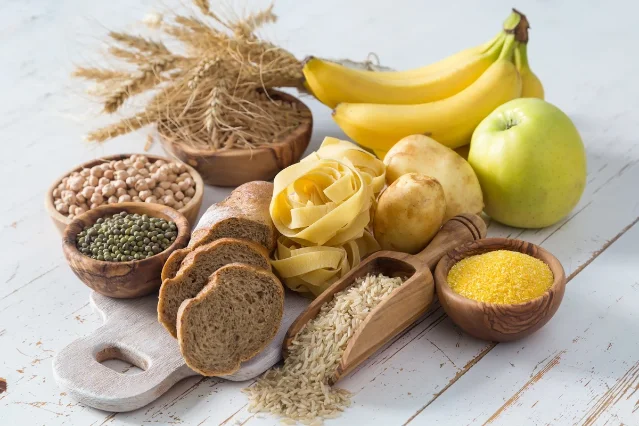
Keep these combinations in a drawer, bag, or office kitchen:
- 🥑 Apple + nut-butter packet + pistachios: crisp carbohydrate, fiber, plant fat, and enough protein to slow the snack down.
- 🧠 Roasted edamame + whole-grain crackers + olives: savory, shelf-stable, and easier to stop at one serving than loose candy.
- ⚡ Tuna or salmon pouch + seeded crackers + olive-oil packet: best for a private office or lunchroom, not the shared conference table.
- Roasted chickpeas + almonds + unsweetened sparkling water: the desk version of "crunchy snack," rebuilt with fiber and fat.
The goal is not to eat a perfect snack. The goal is to avoid the sugar-only pattern that gives you quick stimulation without staying power.
Zero-prep micro-habits for tomorrow
Start with structure, not willpower:
- Anchor water to calendar events. If a meeting is longer than 45 minutes, bring your bottle before you open the video call.
- Refill before the snack. Make the bottle refill the first step of the 2:30pm bridge. Then choose food.
- Store snacks in pairs. Put each crunchy carbohydrate with its protein/fat partner: crackers with tuna, apples with nut butter, roasted chickpeas with almonds.
- Keep the emergency option boring. The best fallback snack is one you will eat when you need it, but not snack on mindlessly at 10:20am.
One more note: if you have diabetes, kidney disease, heart failure, take diuretics, or follow a fluid restriction, use your clinician's guidance rather than a general workplace hydration plan.
Tomorrow, try the simplest version: water before coffee, a refill before your 2:30pm snack, and one Protein + Fiber + Healthy Fats combo within reach.
What is your most reliable sustained-energy snack or hydration habit during a packed workday?
References
- 1CDC: About Water and Healthier Drinks
- 2Effects of Dehydration and Rehydration on Cognitive Performance and Mood
- 3Harvard Nutrition Source: How Much Water Do You Need?
- 4Joslin Diabetes Center: Effects of Carbs, Protein and Fats on Glucose Levels
- 5Harvard Nutrition Source: Carbohydrates and Blood Sugar
- 6The Effects of Soluble Dietary Fibers on Glycemic Response
Add more perspectives or context around this Post.